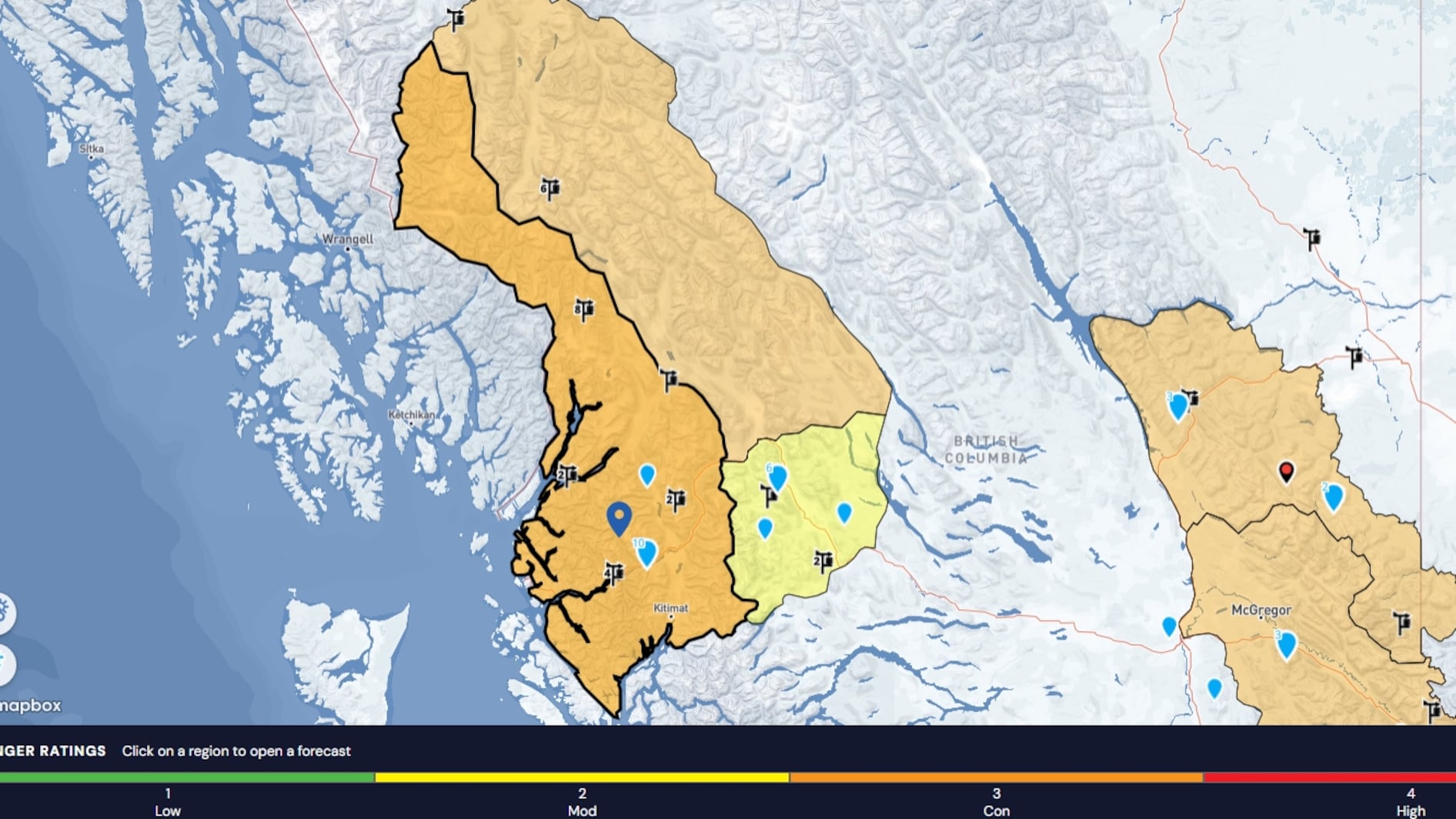
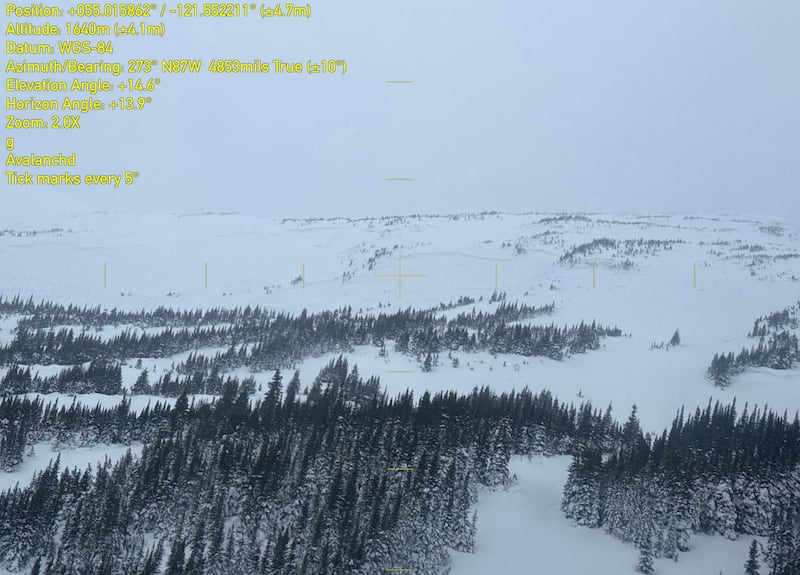
On December 30th, a snowmobiler died in an avalanche in Bull Moose area near Tumbler Ridge, B.C. According to the Avalanche Canada incident report, three snowmobilers were riding when one person was caught and buried in the avalanche. The avalanche was remotely triggered from the base of the slope. Despite rescue efforts, the snowmobiler who was caught in the avalanche did not survive.
Across the province, avalanche conditions have worsened, and avalanche technician at Little Cedar Services Hans Mundhenk says the North Coast region can expect similar changes;
“I think people have enjoyed pretty good surface conditions and avalanche conditions up until now. And now I think we’re going to see avalanche hazard rise quickly over the next couple of days, as the warming and the new precipitation arrive at the North Coast.”
Mundhenk says the long, cold Christmas led to weak layers in the existing snowpack.
“We’ve had a little bit of snow on top of the weak layers and are expecting significant snowfall over the weak snowfall, and maybe rain, up to sort of mid-mountain elevations over the weekend. Yeah. So it’s a bit of a tricky… It’s becoming a bit of a tricky snowpack at the moment.”
An up to date forecast and conservative decisions are essential.
“So, you know, sticking to simple terrain, staying away from known avalanche terrain when the avalanche danger is high, or even extreme. And, you know, the, the usual stuff. So, we travel with a reliable partner, use avalanche gear. So, transceiver, probe and shovel. And, yeah, the big thing starts with making good decisions and getting the forecast at Avalanche.ca “
Avalanche Canada says human triggering remains likely in the North Coast/Skeena region, as reactive storm slabs overlie weak layers at all elevations
They recommend sticking to small, low-angle features and avoid overhead exposure while storm snow settles.