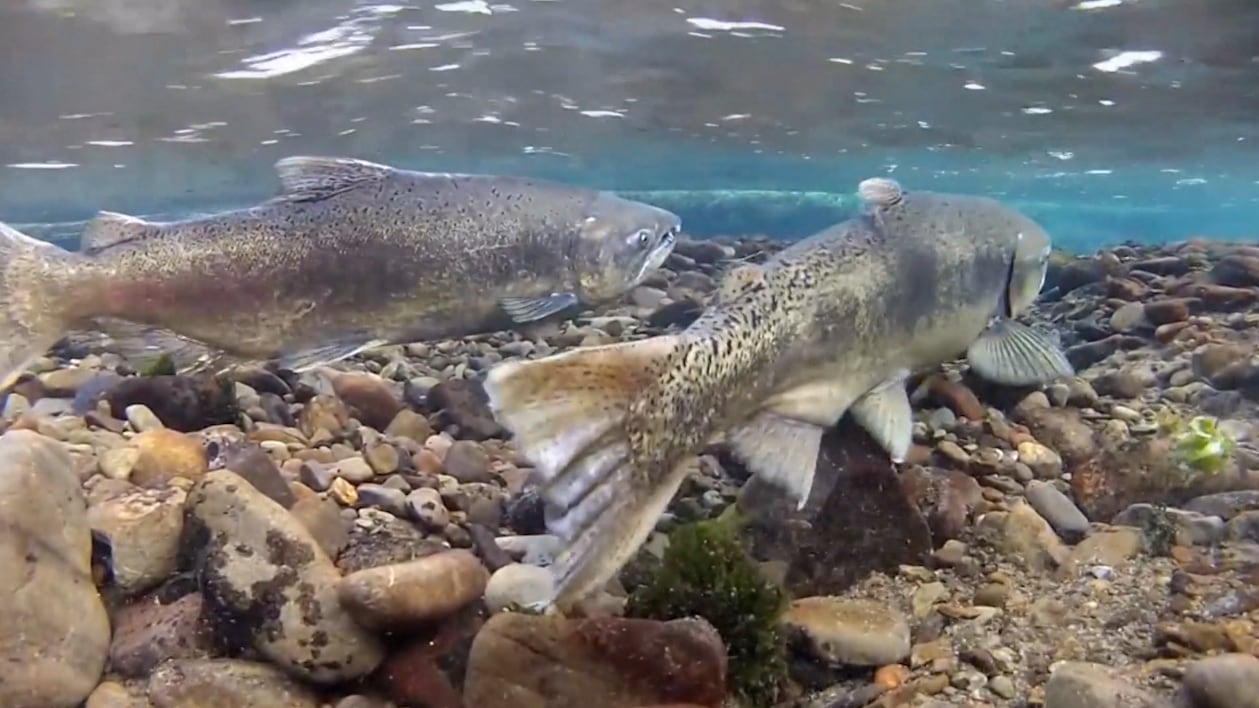
A new study on pacific salmon conservation documents a substantial decline in monitoring of salmon spawning populations in the past 20 years, limiting access to the status of nearly half Pacific Salmon populations.
Dr. Michael Price, Director of Science at SkeenaWild Conservation Trust and adjunct professor in SFU’s Department of Biological Sciences, says that despite assessing salmon health annually being one of the core principles of the wild salmon policy, 20 years after the policy’s adaptation, we’re only assessing the health of about 50% of salmon populations.
“And so one of the fundamental questions was: Has Canada met its, fulfilled its commitment to assessing the health of populations? So that was our that was really the context for why we performed the study. And I guess a short answer, and we can elaborate, is, they’re failing miserably.”
Price says the study looked at how many salmon spawning streams we are counting today, versus how many were counted in 1950.
“And the answer to that is we’re now counting the least number of spawning streams since 1950.”
Price says the implications of this are that decision makers do so without data.
“We’re simply now at a stage where we can only assess the health of 50% of salmon populations. So our ability to even open fisheries or close fisheries or allow industrial projects to occur or not occur, we’re making these decisions essentially blindfolded. We’re managing salmon largely in the dark.”
Price’s study, co-authored with Jonathan Moore and published in the Canadian Journal of Fisheries and Aquatic Studies, can be accessed in full here: From policy to practice: declines in monitoring and Pacific salmon conservation in Canada