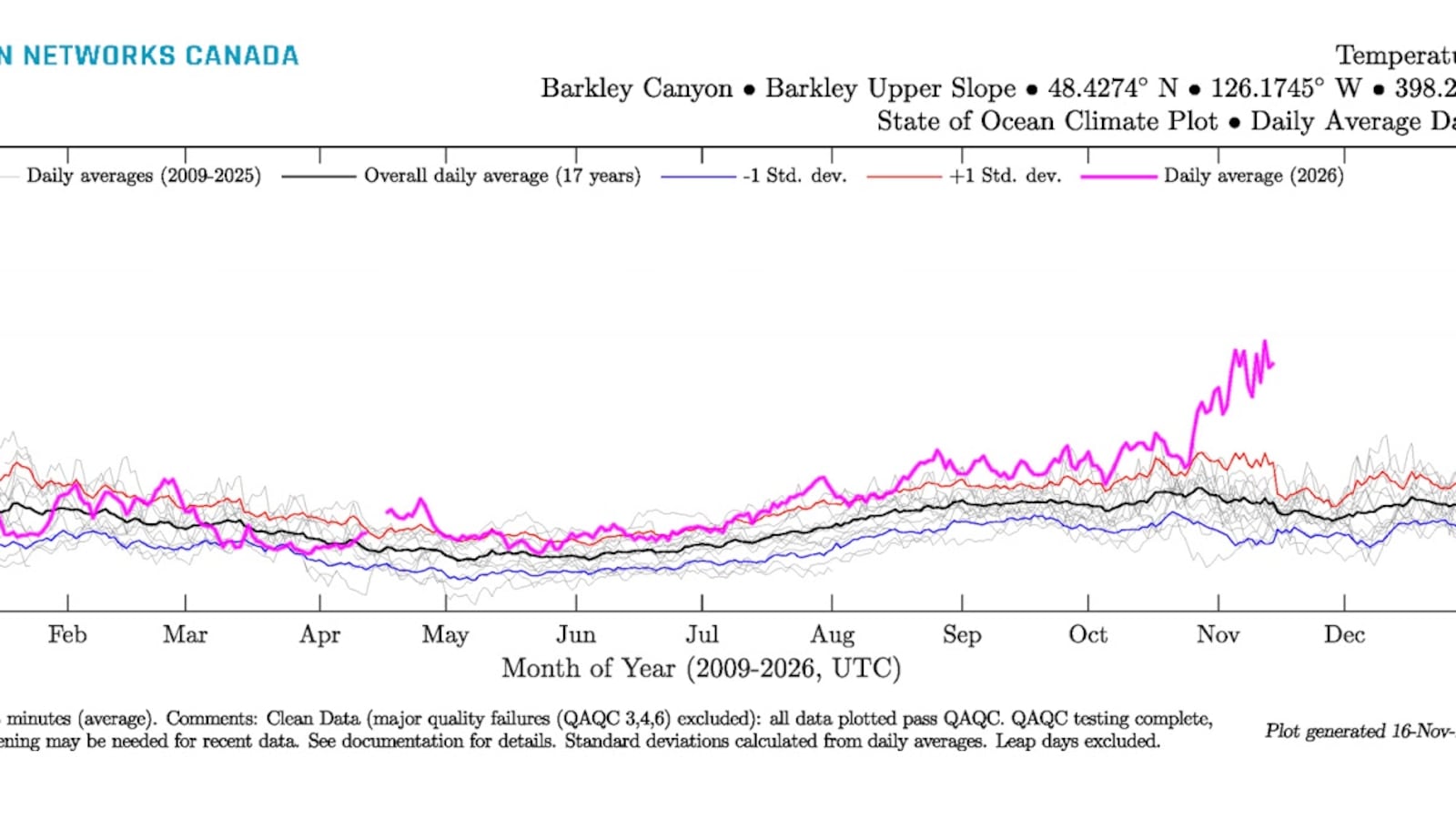
An El Niño is a temperature pattern that occurs in the tropical Pacific Ocean and is driven by the weakening of trade winds that result in abnormally warm temperatures in the Eastern Pacific.
There is a currently active El Niño that has caused the temperature to rise about three degrees and a half degrees, making it the warmest ever recorded El Niño on record.
CFTK-TV recently spoke with Dr. Peter Jackson from UNBC’s Department of Geography, Earth, and Environmental Sciences, who explained why that weather pattern creating warmer winter temperatures matters to Northern BC, even with it occurring a ways away from us;
“Warmer temperatures in winter doesn’t sound that bad necessarily, but keep in mind, that means in some areas, precipitation that would normally fall as snow will now fall as rain. There can be changes in the precipitation pattern as well. It’s not as strong of a signal as with temperature, but there’s a suggestion that there could be below normal precipitation in some parts of British Columbia like Coastal BC, the North Coast and the Northeast. In some of these strong events, if there’s a less of a snowpack and a warmer winter, that carries through into the fire season and the following summer. We might expect the soil to be less moist and therefore, more susceptible to wildfire activity in the summer. That’s a potential outcome.”
Another way the warmer temperatures can affect Northern BC include the depletion of water resources, like lakes and water reservoirs, due to the lack of snowfall.
Dr. Jackson also said that not much can be done in order to stop this kind of weather condition, but we can still take precautions against it’s negative consequences, by preparing for potentially worse wildfires.