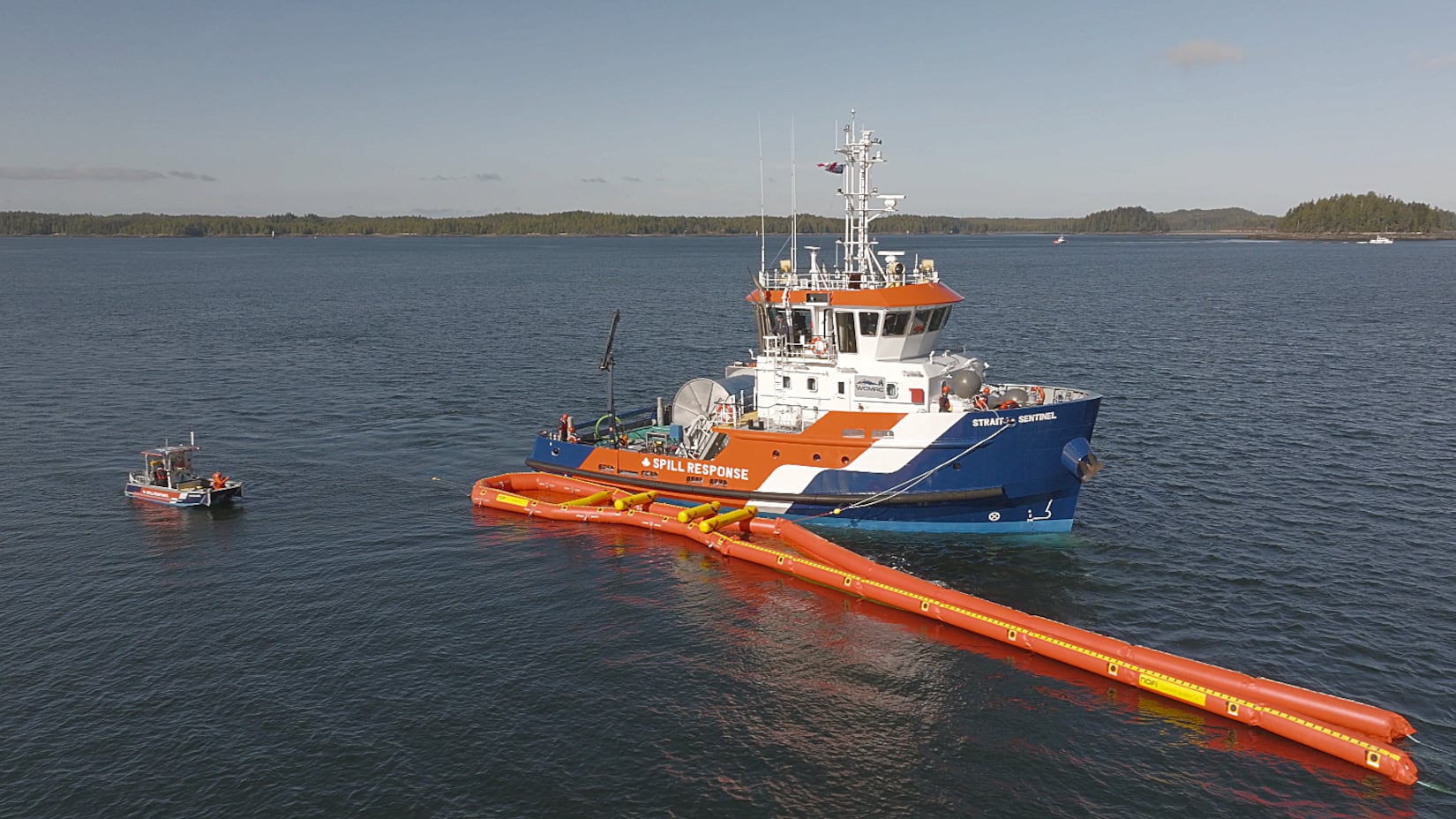
In emergency spill situations, such as the 2006 sinking of the Queen of the North ferry or the recent train derailment near Port Edward, it is imperative that response is quick and effective in order to mitigate damage.
That is where the Western Canada Marine Response Team comes in, says Michael Lowry, who is their Director of Public & External Relations.
“Our jurisdiction is the entire west coast of Canada. And on average, we get about 20 responses a year. Not all of them directly shipping related. We actually were involved in the train derailment a little bit earlier this year. On the North Coast here. And so we can, we can support operations like that as well.We’ve done vessel fires, in marinas in Sydney. We’ve responded to train derailments in Kamloops as well. So, you know, we can be deployed for non-shipping related. But really where our focus is, our member is, is on the deep-sea vessels that call on Canadian Ports, along with any oil handling facilities as well.”
If a spill is larger than local capacity can handle, the team brings in resources from South Coast operations and mutual aid partners up in Alaska.
“Of course, all of our bases do exercises and drills all the time. But it was important for us today to exercise that cascading of resources in. We all know that the port of Prince Rupert is experiencing a large increase in shipping traffic. And projections continue to increase up to 270% by the end of the decade. So we know that shipping is increasing in Prince Rupert. So, we want to be able to test our ability to cascade resources in from other locations to boost up the capacity, the local capacity we have at our, from our vessels and crew that are stationed here in Prince Rupert full time.”
On this occasion, the team is responding to a simulated spill, exercising response and cohesion between responding groups.
“Today we’re doing the on-water piece. But for any large incidents, you’re also going to have what’s called an incident command post that’s set up. So that’s where we have a unified command. We have important players from the field department involved in that. So, the Coast Guard would be the lead agency in there. We have Environment Canada helping with other environmental decisions. We have the local Indigenous communities that would be part of that, that command post as well, helping with decisions around new environments and protection and whatnot. So a lot of different players will be involved and we’ll be doing that tomorrow. At the Crest [hotel], we’ve set up a conference room there that would be simulating the incident command post. So that’s going to be… That, in a real spill, that’s going to be the room that’s supporting the operations that you see out in the water.”
The drill aims to ensure teams and equipment remain prepared to respond effectively.