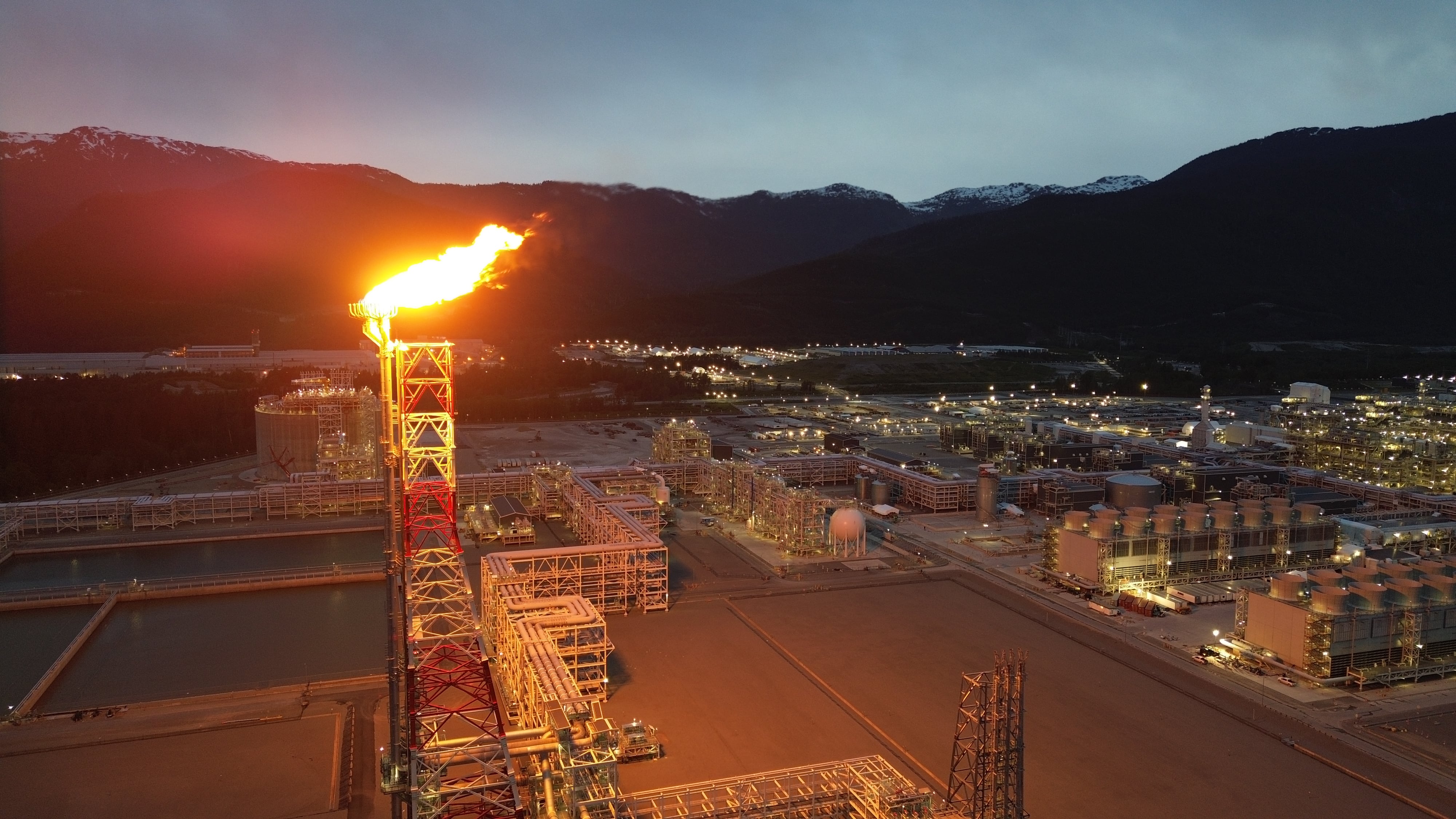
Local residents have been having quite a few concerns about Flaring at the local LNG Facility in Kitimat, namely with how Flaring affects the health of residents.
An Open House was recently hosted by LNG Canada in Kitimat at the Riverlodge Recreation Centre to address the concerns of the residents.
LNG Canada’s Chief Corporate Relations Officer, Tara Barnett, attended the Open House and went onto address talking points, like the facility’s broken warm wet flare nozzle;
“The first thing to know with that flare tip that has a problem is that there’s actually 4 flare tips at the top of the flare stack, and that’s one of them. So when we identified the problem, we immediately switched to using the spare flare, which is also one of the tips at the top. That’s a redundancy that’s built into the plant so we always have safe operations, there was never a moment where it was unsafe. Once we identified that, we proactively ordered a new flare tip and that replacement work has already started. What will happen is that we’ll take the one that has the integrity issue down and we’ll put another one up into it’s place. what’s important to note too is that even with those higher flare volumes, the air quality in the community was always well within human health limits.”
Barnett next went onto mention that excessive flaring is just a normal part of starting up an LNG plant anywhere in the world while she also explained how starting up one of those plants works as well as how flaring’s been progressing during the previous few months;
“There’s two trains at the LNG Canada Facility and the trains are LNG processing units. Each of them have strings in them but the point is we start with train one, that was the first start up. We started that in June of last year. And then the second train start up was in December, so you have a very long period of start up flaring for the first train and then another period of start up flaring for the second train. It’s a process whereby as you bring the plant on and you work through real world conditions, you get more and more stable. We’ve actually decreased flaring by 30 percent in the last six months. We have a task force in place now to work on further reduction opportunities and those will just keep going as we work through the first full year of operations.”
She then stated that flaring is a safer method of managing gas compared to venting, which can create vapour clouds, which in turn can cause explosions.
LNG Canada does already use the Voyent Alert system to warn residents of incoming flaring periods and anyone wanting to see flaring reports straight from LNG Canada can do so at the company’s website.