
Red Dress Day - a day to honour and commemorate missing and murdered Indigenous women and girls in Canada - was observed yesterday in Terrace, with a memorial walk and ceremonies held on the Xpilaxha trail in Terrace. Tears to Hope founder Lorna Brown said that despite the heaviness of the day, the support was there;
“I found myself being waking up very, tired, frustrated. And today, coming into this event and then seeing so many people waiting here… They were here half an hour before the event started. And to have, you know, an organization, an Indigenous business come in and offer to give out red t-shirts at no cost, you know, to those that wanted to come and support and that just really kind of lifted my spirits. And it can be a heavy day. Because we’re always thinking of our loved ones, and can carry a lot of weight for a lot of families, not just our own.”
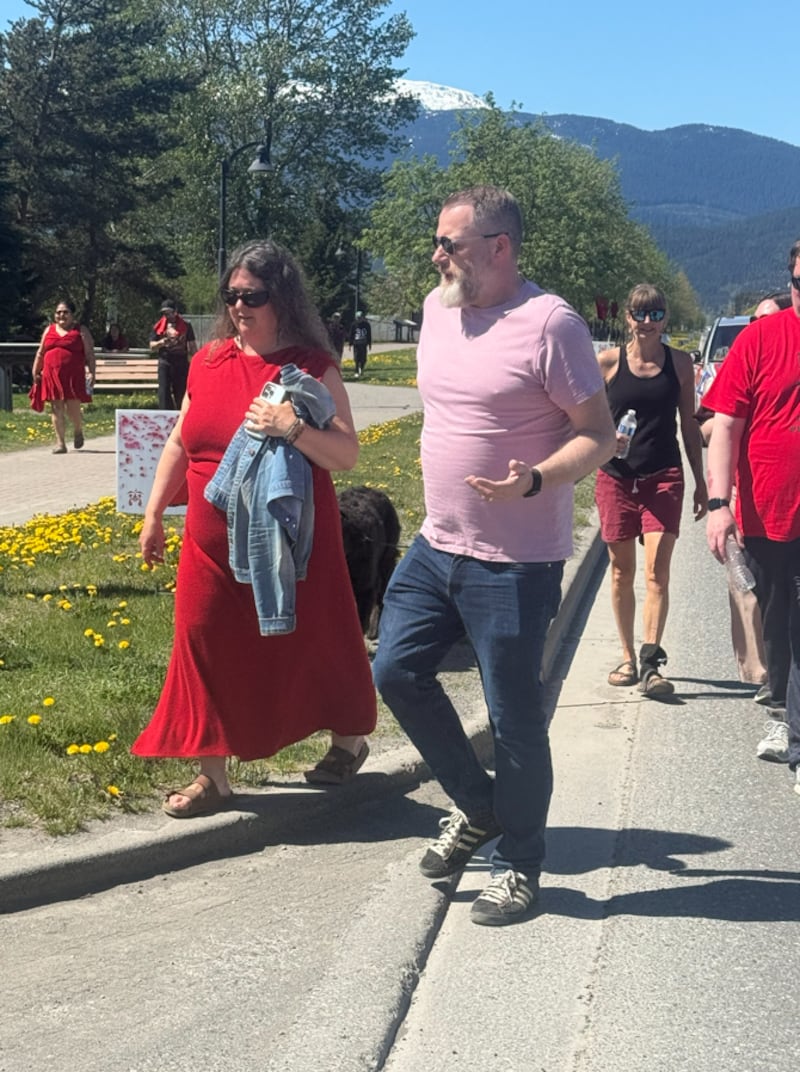
It was a sea of red as walkers passed the red dresses hanging from trees along the route. Lorna’s niece Tamara Chipman went missing in September of 2005 – leading to over 20 years of searching and advocacy for Lorna and her family.
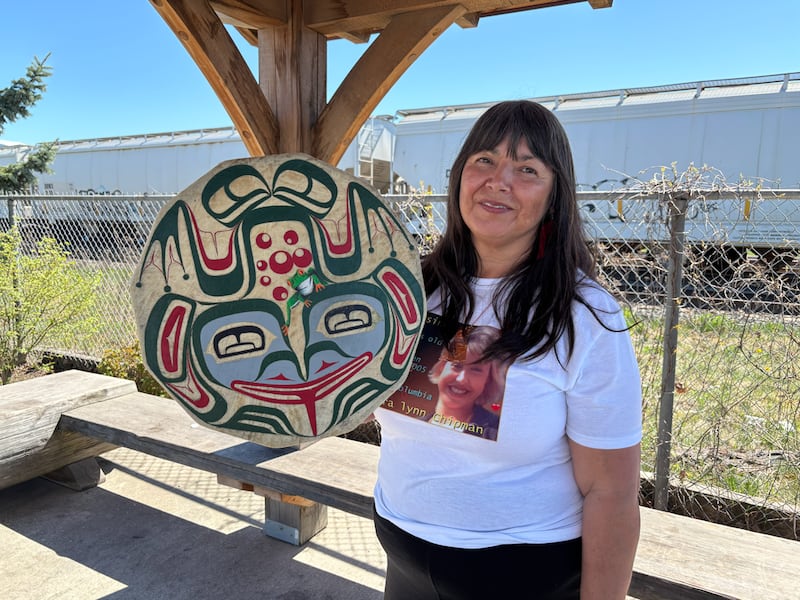
“It’s not work that we ever wanted to do, or that we signed up for. But, you know, this happened to our families. And as many times as we tried to kind of like, not do the work, you know, awareness and, and safety and all the things, justice, that we work for, you know, all of those things we continue to do. Because now we feel called to the work even though we’ve never asked to do it.”
Terrace Mayor Sean Bujtas attended the walk and emphasized the importance of higher government stepping up;
“You know, this is a National crisis that, you know, we’re not addressing fast enough. So what is higher levels of government doing, and when are they going to do them to address this issue? We see crises all across this country, across this world, and people step up and they’re fixing the problem. And this one kind of just seems to just sit there with no real plan of action in place. And we really need to call on higher levels of government to put that plan in place and deliver.”
In a statement on Red Dress Day, Nina Krieger, Minister of Public Safety and Solicitor General, said:
“We have heard clearly from Indigenous communities: They must lead this work. That is why our government released A Path Forward and established the Path Forward Community Fund. Through that fund, more than 100 community-based anti-violence projects have received nearly $21 million in combined provincial and federal support. This June, we will release our annual progress update, tracking government’s response to the National Inquiry’s final report.
“We are investing in safer travel in remote regions of B.C. Along Highway 16, the Highway of Tears, we have supported a Rogers Communications project delivering more than 250 kilometres of continuous cellular coverage between Prince Rupert and Smithers, connecting people to emergency services. BC Bus North is providing safe, affordable transportation between northern communities. Last year, BC Bus North served nearly 16,000 passengers.
“We are also working with First Nations to develop new safety-officer models that work alongside police and social service providers to fill critical gaps in community safety.
“We know there is more work to do and we’ll continue striving toward our shared vision. I express my deep condolences to those who have experienced loss and harms, and recognize the strength of survivors, family members, friends and advocates as we work together to address this national crisis.”
According to the Canadian Institutes of Health Research, the ongoing crisis of missing and murdered Indigenous women, girls, and 2SLGBTQI+ people that we are facing is a direct result of colonization. In Canada, more than six in ten (63%) Indigenous women have experienced physical or sexual assault in their lifetime. The impact of these disproportionately high rates of violence is felt in all areas of life. The effects on health and wellness include inequitable access and treatment in health care and underrepresentation in health research.
If you, or someone you know is experiencing signs of distress don’t hesitate to reach out to services available 24/7/365:
- Hope for Wellness Help Line (Indigenous centered): 1-855-242-3310
- Crisis Services Canada: (Canada-wide) 9-8-8
- National Family and Survivors Circle: 1-844-413-6649